

Blog / Wellbeing at work is not an individual problem
Wellbeing at Work Is Not an Individual Problem
Emma Clarke
18 May 2026
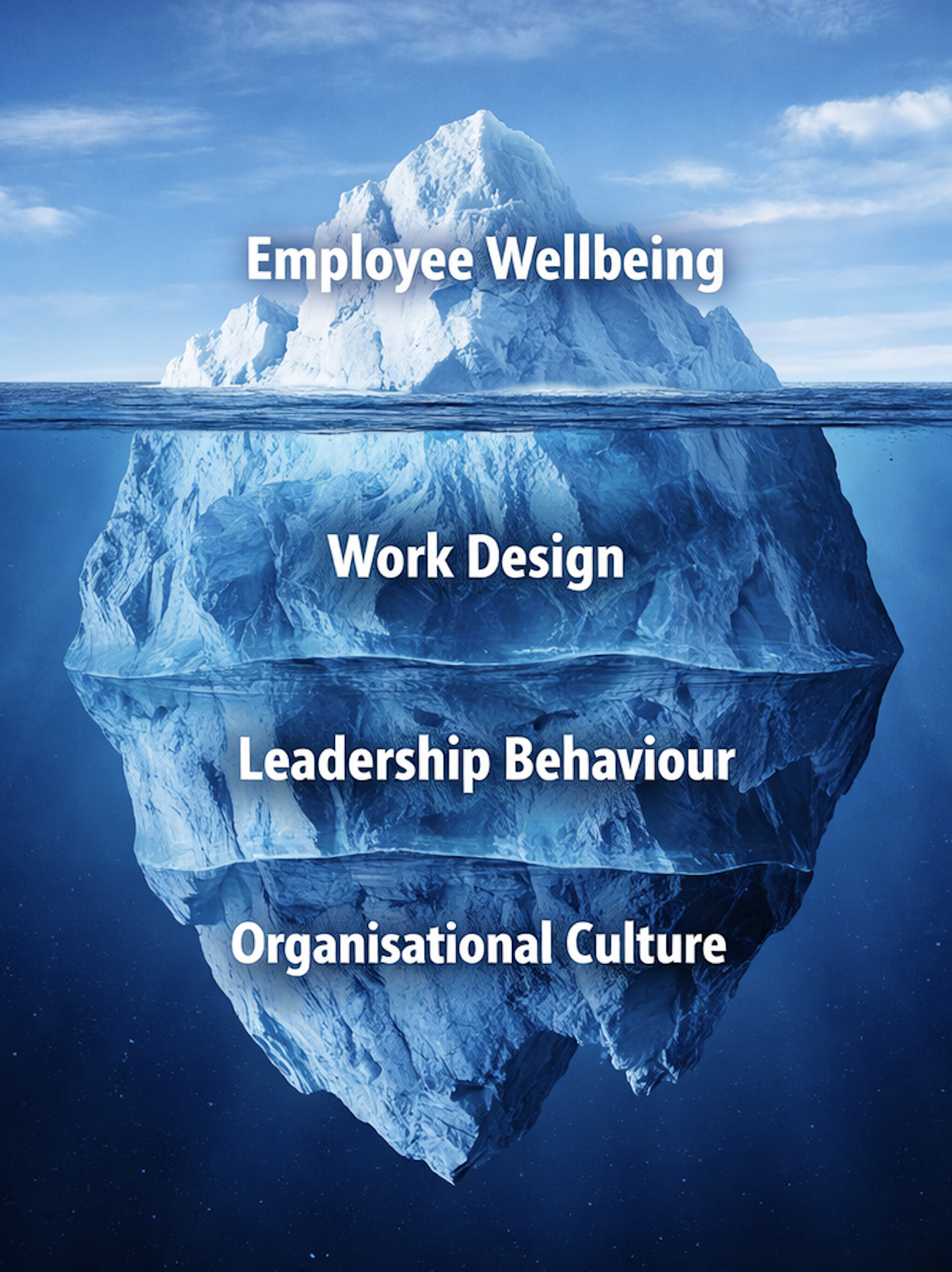
After speaking with more than 20 HR leaders across multiple countries, one theme consistently emerged:
Many organisations are still approaching employee wellbeing as an individual responsibility rather than addressing the organisational conditions that shape it.
Despite growing awareness around mental health and workplace wellbeing, the solutions being implemented often remain surface-level. Resilience programs, mindfulness training, wellbeing apps, and pulse surveys have all become common responses. While these initiatives can provide value, they rarely address the underlying drivers of strain within organisations.
The real conversation needs to go deeper.
Wellbeing Is Shaped by the System Around People
Employee wellbeing is not created in isolation. It is shaped every day by how work is designed, how leaders behave, and what organisational culture allows or discourages.
When these foundations are unhealthy, no amount of individual coping strategies will sustainably solve the problem.
Work design
One of the strongest influences on wellbeing is the way work itself is structured.
- Are roles realistic and manageable?
- Are priorities clear and aligned?
- Do employees have the resources and autonomy they need to perform effectively?
Or are people expected to operate in a constant state of overload, ambiguity, and reactive urgency?
Poor work design creates chronic stress long before burnout becomes visible.
Leadership Behaviour Matters More Than Many Organisations Realise
Leaders shape the emotional climate of an organisation.
When leadership creates clarity, consistency, trust, and psychological safety, people are more likely to perform well, collaborate effectively, and remain engaged.
But when leadership is reactive, inconsistent, or pressure-driven, employees absorb that uncertainty quickly.
People do not simply respond to workload - they respond to the environment leaders create around that workload.
Culture Defines What Is Actually Safe
Every organisation has spoken values, but culture is revealed through everyday behaviour.
- Can people speak up openly?
- Can they challenge decisions respectfully?
- Can they set boundaries without fear of negative consequences?
- Can mistakes become opportunities for learning instead of blame?
These questions are not “soft” concerns. They are fundamental indicators of organisational health, performance, and long-term sustainability.
Measuring Feelings Is Not the Same as Improving Conditions
Many organisations are becoming increasingly sophisticated at measuring employee sentiment. Surveys, engagement scores, and wellbeing metrics provide useful signals.
But measurement alone does not create change.
Understanding how employees feel is important - but sustainable wellbeing only improves when organisations address the conditions generating those experiences in the first place.
Wellbeing Is an Organisational Outcome
Wellbeing should not be viewed as an individual problem to fix.
It is an outcome that emerges from how organisations are designed, led, and experienced every day.
This requires moving beyond performative wellbeing initiatives toward a more systemic understanding of organisational health.
At Helder, we help CEOs and executive teams detect and make sense of complex cultural signals and organisational risk - enabling healthier workplaces, stronger performance, and more sustainable leadership.